
CRANIOSACRAL THERAPY · SOUTH SURREY
Craniosacral Therapy
Gentle care for the nervous system and whole body.
Craniosacral therapy (CST) is a gentle, hands-on treatment that uses very light touch and subtle techniques around the head, neck, spine, sacrum and other areas of the body.
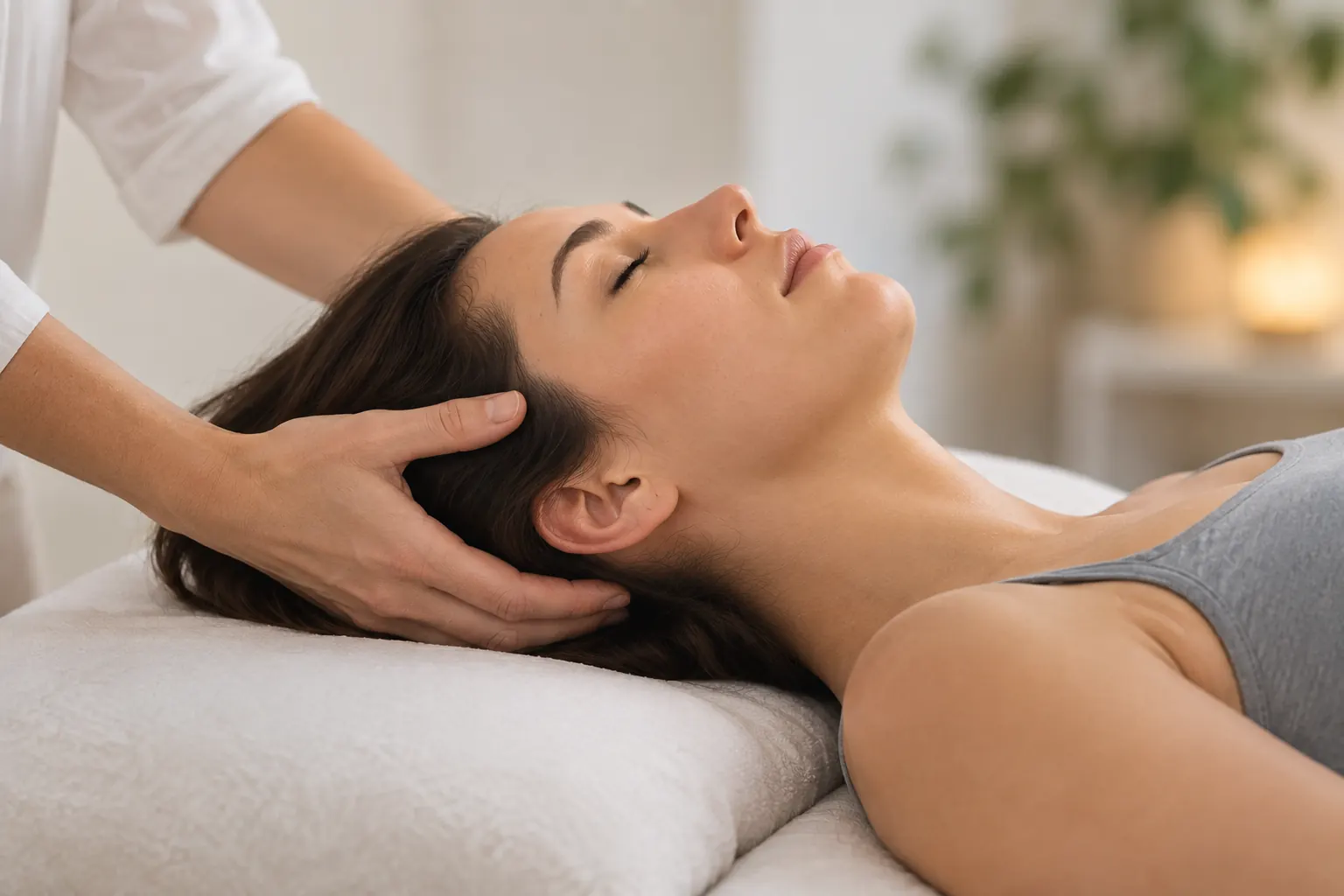
Not massage pressure. Sustained, listening contact.
Unlike traditional massage, which often uses pressure to work directly into muscles and soft tissues, craniosacral therapy takes a much gentler approach. Treatment focuses on reducing areas of tension and restriction within the body’s connective tissues and encouraging an overall state of relaxation.
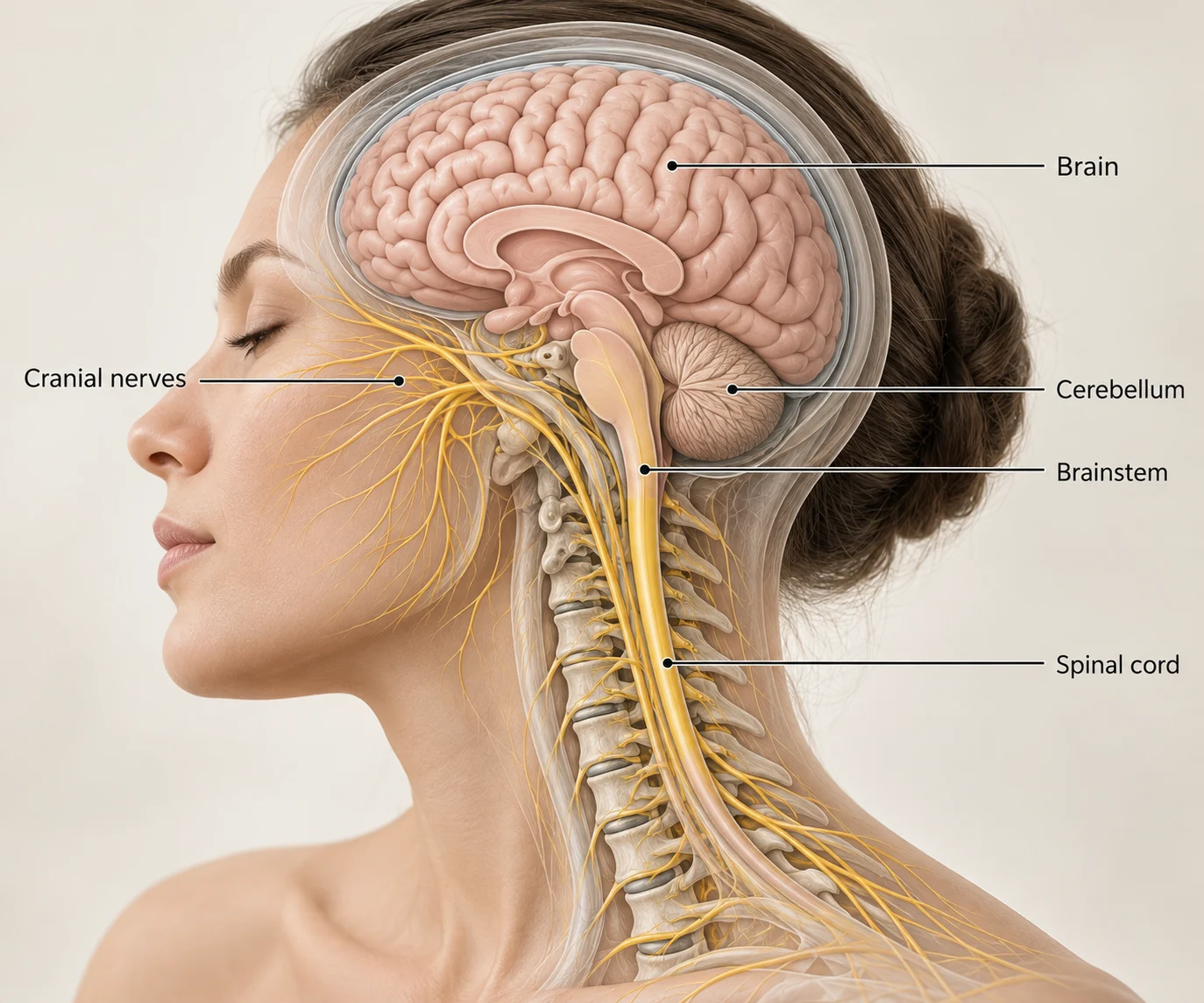
Because the brain and spinal cord form the central nervous system and are surrounded and supported by connective tissues and fluid-filled structures, craniosacral techniques commonly focus on areas surrounding the skull, spine and sacrum.
How does craniosacral therapy work?
During treatment, the therapist uses light, sustained contact at specific areas of the body. Contact points run from the skull down to the sacrum:
- Head and skull
- Base of the skull
- Jaw
- Neck
- Shoulders
- Spine
- Rib cage
- Pelvis
- Sacrum
Rather than forcing movement or applying deep pressure, the therapist works slowly and gently, responding to areas of tension and restriction they feel within the soft tissues.
One of the most noticeable effects of treatment for many patients is a profound feeling of relaxation. Craniosacral therapy may be incorporated into a broader treatment plan when the goal is to decrease tension, promote relaxation and provide a gentler form of hands-on care.
The craniosacral system
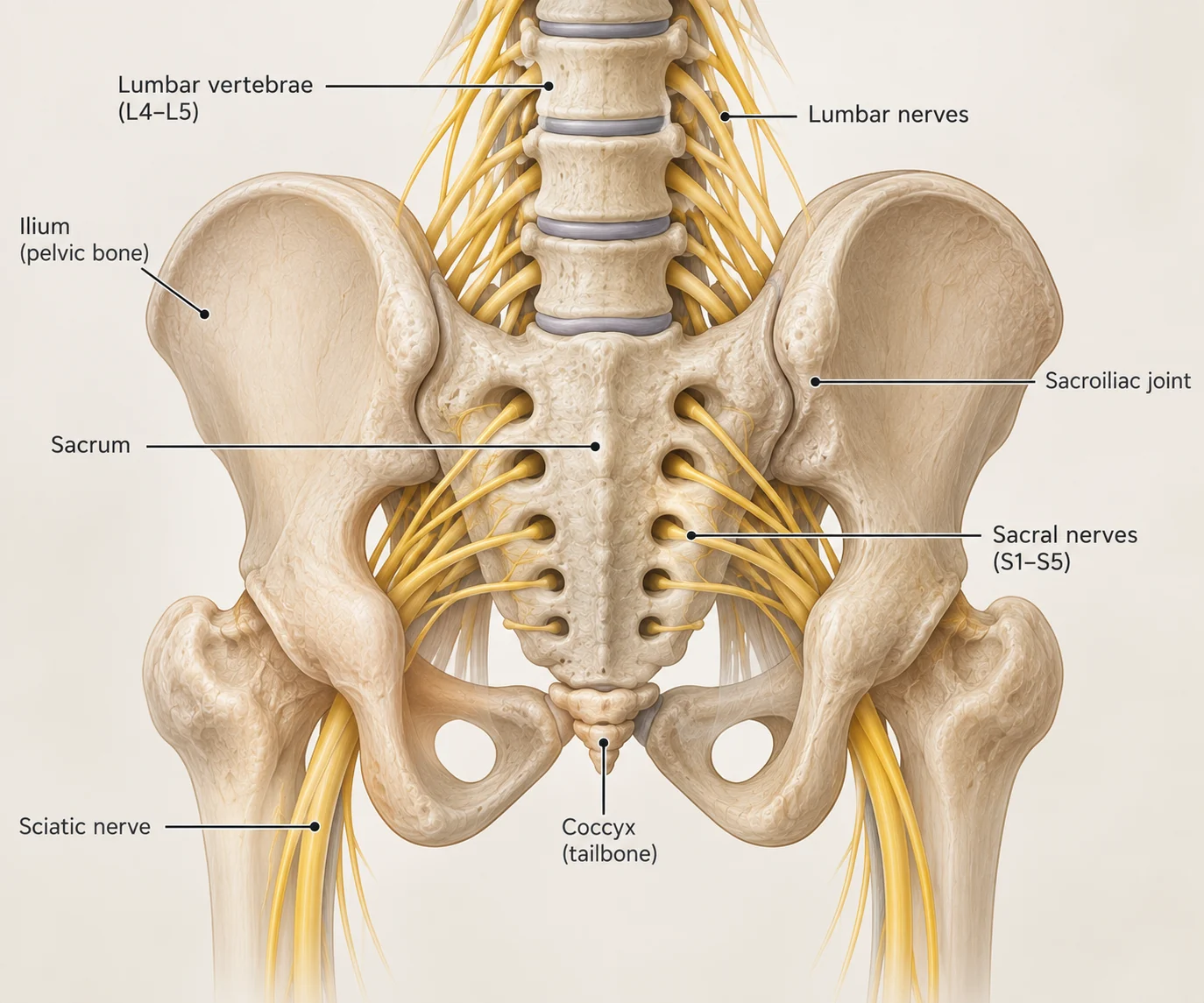
The term “craniosacral” refers to the relationship between the cranium (skull) and sacrum at the base of the spine.
Between these areas lies the central nervous system (the brain and spinal cord), which is surrounded by protective membranes and cerebrospinal fluid.
Craniosacral therapy uses gentle manual techniques around these structures and the body’s surrounding connective tissues. Treatment does not involve forceful manipulation of the skull or spine.
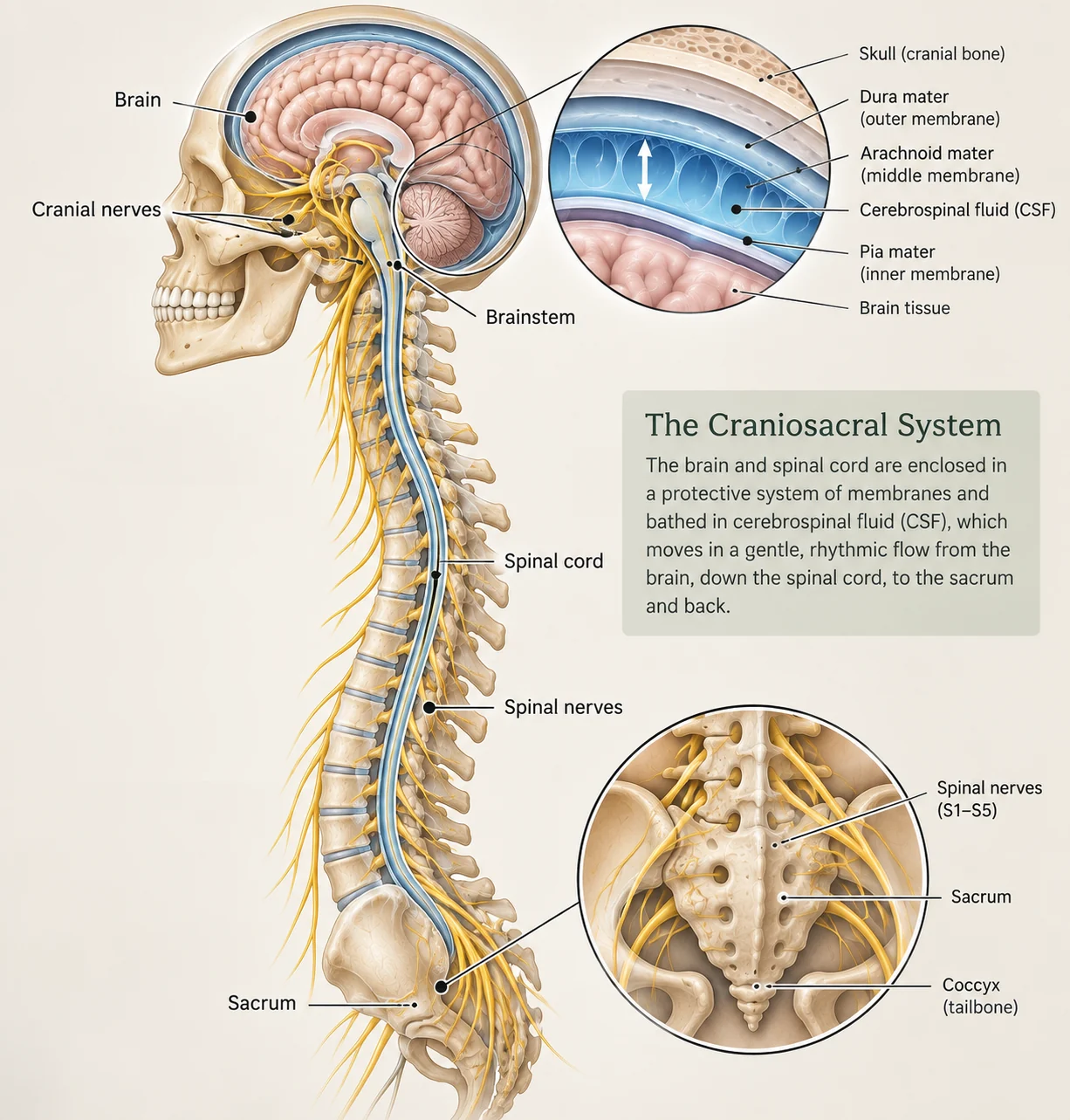
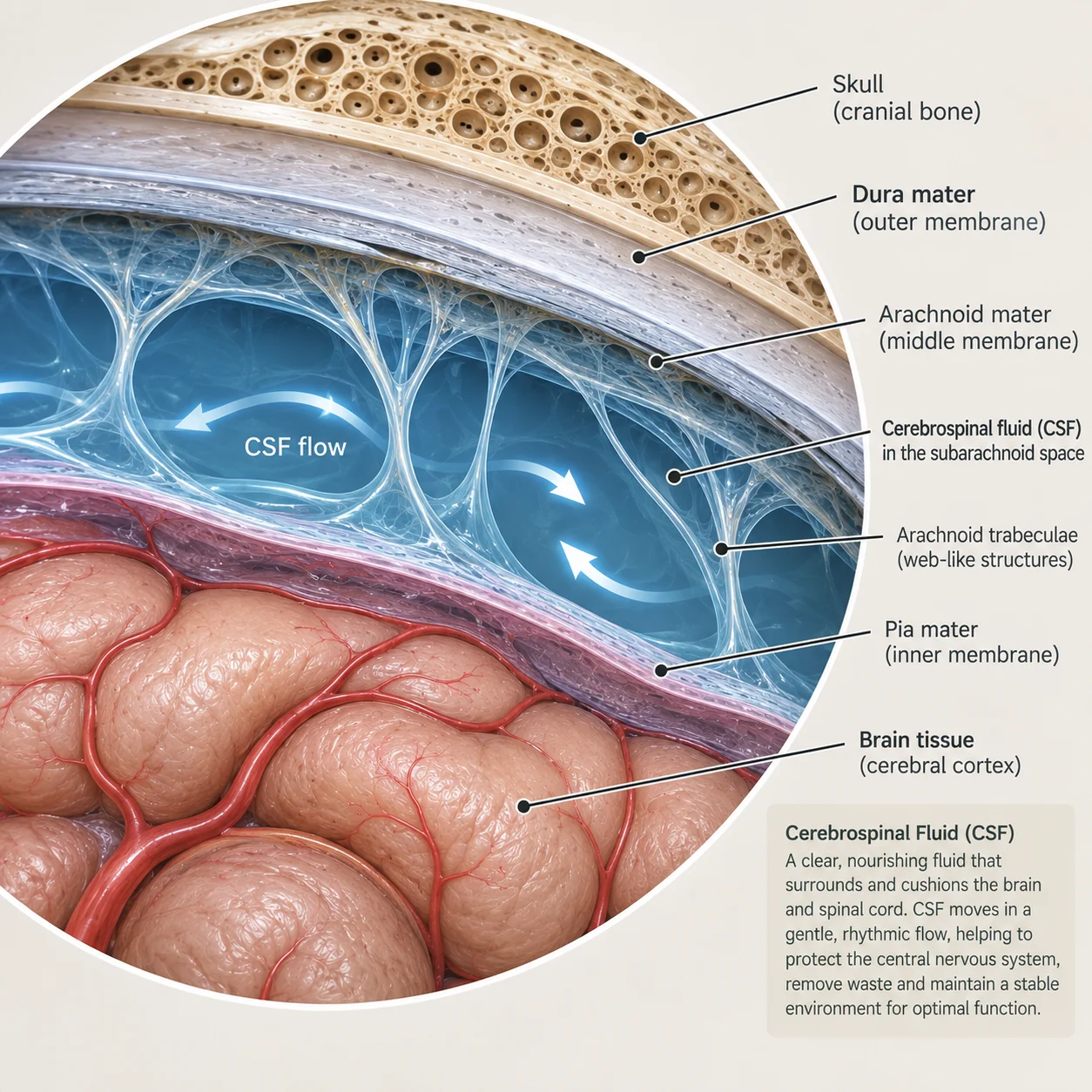
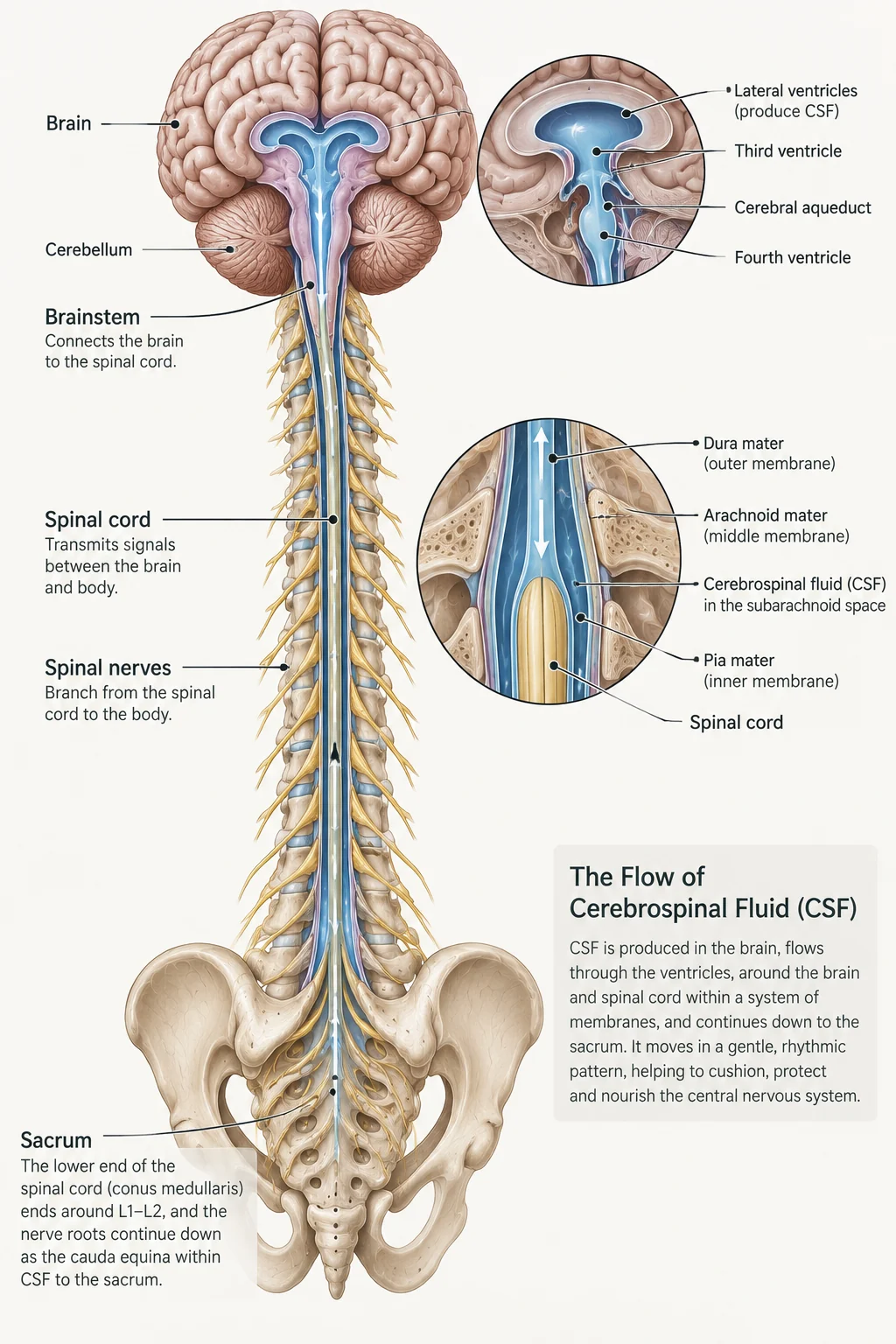
These structures are why treatment concentrates around the skull, spine and sacrum rather than working muscle by muscle.
Structures named in the diagrams
Cranium · brainstem · cranial nerves · spinal cord · spinal nerves · dura mater · arachnoid mater · pia mater · cerebrospinal fluid · sacrum · coccyx
What does a craniosacral treatment feel like?
Craniosacral therapy is extremely gentle.
Patients typically remain fully clothed and lie comfortably on a treatment table. The therapist places their hands lightly at different areas of the body and may maintain a position for several minutes at a time.
There is generally no deep pressure, vigorous massage or forceful manipulation.
During treatment, patients may notice sensations such as:
- Warmth
- Heaviness
- Subtle movement
- Deep relaxation
- Falling asleep
Some patients may even fall asleep during treatment. Every person’s experience is different.
When might someone choose craniosacral therapy?
Craniosacral therapy may be considered when someone is looking for a gentle, low-pressure approach to hands-on treatment. Patients may seek craniosacral therapy as part of their care for concerns such as:
General muscular and fascial tension
Neck and upper-back tension
Headaches or head and neck tension
Jaw and TMJ-related tension
Stress and difficulty relaxing
Persistent pain or sensitivity where deeper treatment is uncomfortable
Postural tension
General relaxation and wellness
Craniosacral therapy may also appeal to people who find traditional massage pressure uncomfortable or simply prefer a quieter and gentler treatment experience.
Craniosacral therapy should complement, rather than replace, appropriate medical assessment or treatment when symptoms require medical care.
What happens during an appointment?
A craniosacral session is generally slow, quiet and relaxing. Your therapist will adapt treatment based on your comfort level and individual needs.
Intake
Your therapist will begin by discussing your health history, symptoms and goals for treatment.
On the table
You will typically remain fully clothed and lie comfortably on the treatment table.
Treatment
Using gentle hand placements and light pressure, your therapist may work around the head, neck, shoulders, spine, pelvis and sacrum as well as other areas where tension or restriction is identified.
Craniosacral therapy vs. traditional massage
Traditional massage
Works directly with muscles and soft tissues using techniques such as kneading, compression, stretching and varying levels of pressure.
Craniosacral therapy
Uses considerably lighter touch and slower techniques, holding sustained contact rather than working into tissue.
Together
The two approaches can complement one another. Depending on the practitioner’s training and the patient’s needs, craniosacral techniques may be incorporated into a massage therapy treatment or provided as the primary focus of the appointment.
Additional training
Craniosacral therapy is a manual therapy technique that requires additional education beyond a practitioner’s foundational healthcare or massage therapy training.
Practitioners may complete multiple levels of craniosacral education and continuing professional development. Some training organizations also offer formal certification pathways following advanced coursework, clinical practice and examination.
Coursework may include
- Advanced anatomy and physiology
- The skull and sacrum
- Connective tissues and fascia
- The central nervous system
- Assessment techniques
- Specific hand placements
- Craniosacral treatment techniques
Is craniosacral therapy right for everyone?
Although craniosacral therapy uses very gentle pressure, it may not be appropriate in every situation.
Tick anything that applies to you and bring it to your appointment. When appropriate, medical clearance may be recommended before proceeding with treatment.
Sometimes effective hands-on care doesn’t need to be deep or intense.
Craniosacral therapy offers a quiet, gentle approach focused on reducing tension, promoting relaxation and supporting overall well-being.
Treatment is always individualized to the person in front of us: their comfort, their goals and what their body needs that day.