

If the first few steps out of bed feel like walking on a bruise, and it eases once you get moving, plantar fasciitis is a common reason. It is the most common cause of heel pain, it is very treatable, and you do not have to just put up with it.
Here is what is going on in your foot, what tends to bring it on, what you can try at home, and when it is worth getting help.
What plantar fasciitis is
The plantar fascia is a thick band of tissue running along the bottom of your foot, from your heel bone to your toes. It supports your arch every time you stand, walk or run.
When it is strained over and over, tiny tears can form in it. That leads to pain and irritation, usually right where the fascia attaches to the heel. HealthLink BC’s page on plantar fasciitis explains it in plain language and is a good, trustworthy read if you want more detail.
The telltale signs
The classic sign is pain with your first steps in the morning, or when you stand up after sitting for a while. It often loosens up after a few steps, then creeps back as the day goes on.
Other common signs include pain that is worse on stairs or when you stand on your toes, soreness after long periods on your feet, and pain at the start of exercise that fades as you warm up, then returns afterwards.
Heel pain can have other causes, including nerve problems and arthritis, so an assessment is worth it if things do not match this pattern or are not improving.
Why it happens
Plantar fasciitis usually builds up over time rather than coming from one moment. Things that make it more likely include:
- Long hours standing or walking, especially on hard floors
- Running, or a sudden jump in how much you are doing
- Tight calf muscles or Achilles tendons
- High arches, flat feet, or feet that roll inward when you walk
- Shoes that are worn out or do not support your arch
- Carrying extra weight
- Being in middle age, when it is most common
A change in routine often plays a part, like switching from sandals to stiffer fall boots, starting a new walking habit, or getting back into running after a break. If your heel started complaining recently, it is worth asking what changed.
What you can try at home
No single treatment works best for everyone, and that is worth knowing so you do not give up after one thing does not fix it overnight. A few sensible starting points:
Ease the load. Cut back on whatever seems to set it off, such as long runs or hours on a hard floor, without stopping moving altogether.
Stretch your calves and toes. Several times a day, gently. Tight calves pull on the heel and the fascia.
Ice the sore spot. A cold water bottle rolled under the arch for a few minutes is simple and soothing.
Look at your shoes. Good arch support and a cushioned sole help. Try not to pad around barefoot on hard floors first thing in the morning, which is exactly when it hurts most.
When to get it looked at
See a doctor promptly if heel pain comes with fever, redness or warmth, or numbness or tingling, or if you cannot put weight on your foot after an injury.
Book an assessment if home care has not helped after a week or two, if the pain is changing how you walk, or if it keeps coming back. With treatment, many people notice less pain within a few weeks, although it can take a few months, sometimes longer, for it to settle completely. Getting a clear plan early means you are not left guessing about what to try next.
How physiotherapy can help
A physiotherapist will look at your foot, but also at your ankle, calf, knee and hip, and at how you walk. Heel pain is often about how load travels through the whole leg, not just the heel.
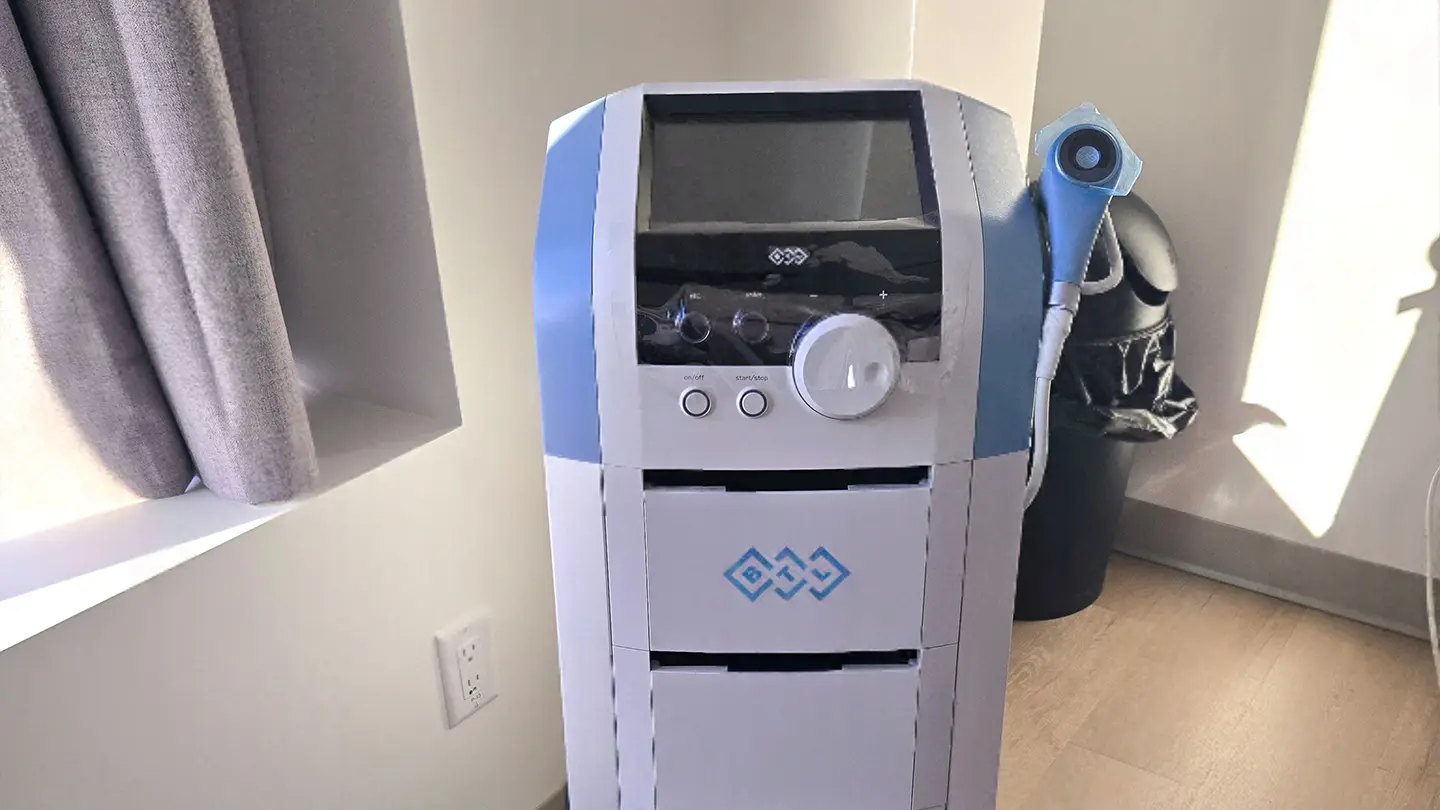
From there, treatment usually centres on a plan of stretching and strengthening exercises, with hands-on manual therapy and advice on footwear and activity. Depending on your situation and your physiotherapist, other techniques such as shockwave therapy may be discussed as an option. Your physiotherapist will explain what each one involves and why it is being suggested, so you can decide together. Here is more on physiotherapy in South Surrey.
What to expect at your first appointment
Your first visit starts with questions. When did it start? Is it worse in the morning or after a long day? What shoes do you wear most, and what have you changed recently? Bring the shoes you spend the most time in, including your work or running shoes, because they tell a practitioner a lot.
Then comes a look at how you stand and walk, how your ankle and big toe move, and how flexible and strong your calf is. You should leave knowing what is likely driving your pain, what the plan is, and a couple of things to start doing that day.
If you have been pushing through pain for a while and are not sure whether it is a niggle or something more, our post on when to stop pushing through the pain is a useful companion read.
How massage therapy can help
Tight calves and a tense foot often go hand in hand with plantar fasciitis. A registered massage therapist can work on the calf muscles, the Achilles area and the foot itself to ease that tension, which many people find makes stretching more comfortable.
Massage therapy pairs well with an exercise plan rather than replacing it. Read more about registered massage therapy in South Surrey.
How kinesiology can help
Kinesiology focuses on exercise and movement. A kinesiologist runs their own assessment and builds a program around strength, balance and how you move, which can be useful if you are heading back to running, hiking or long days on your feet and want to build up gradually.
Common questions
Why does plantar fasciitis hurt most in the morning?
Overnight, the fascia and calf tighten while you are off your feet. Those first steps stretch it suddenly, which is why it hurts most then and eases as you move.
How long does plantar fasciitis take to heal?
Many people feel better within a few weeks of starting treatment. Settling completely can take a few months, and longer for some people, which is why consistency matters.
Should I stop running?
Not always. Reducing how far or how often you run while the heel settles is usually more useful than stopping completely. A physiotherapist can help you plan it.
Is it a heel spur?
Heel spurs and plantar fasciitis can happen together, but a spur is not always the cause of the pain. An assessment helps sort out what is going on.
Do I need a referral?
No referral is needed to book physiotherapy or massage therapy in BC. Some extended health plans ask for one before they reimburse, so check yours.
Book an assessment
If your heel has been greeting you every morning, it is worth getting it checked. Book physiotherapy, registered massage therapy or kinesiology online at rih.janeapp.com, or call (604) 606-7519 and we will help you choose where to start.
This entry is general information. For advice about your own situation, book an assessment with one of our practitioners.
Sources
- Plantar fasciitis healthlinkbc.ca